
What we haul in
The materials below cover almost every delivery we make. If you need something else, ask.
- Crushed gravel and road base for driveways, parking pads, and building pads.
- Drain rock and washed rock for French drains, drywells, and around foundations.
- Sand for under slabs, bedding for pipe, and leveling for pavers or above-ground pools.
- Topsoil for finish grading and lawns.
- Fill dirt and pit run for raising low ground, backfill, and building up a pad.
- Larger rock and rip rap for swales, spillways, and bank protection, in sizes the truck can carry.
What we haul out
Everything we dig produces spoils, and a lot of our hauling is dirt leaving a site. A foundation on a walk-out lot, a pond, a septic replacement, or a driveway cut through a bank all leave more dirt than the property can absorb. When it cannot be spread on site, we load it into the dump truck and take it to a fill site. The same goes for old gravel scraped off a driveway that is being rebuilt, sod and topsoil stripped from a pad, and rock that came out of a trench. Spoils that can be reused, like clean fill from a foundation hole, we try to place on the same property first, because a load that never leaves the site is the cheapest load there is.
Delivered and spread, or dumped where you point
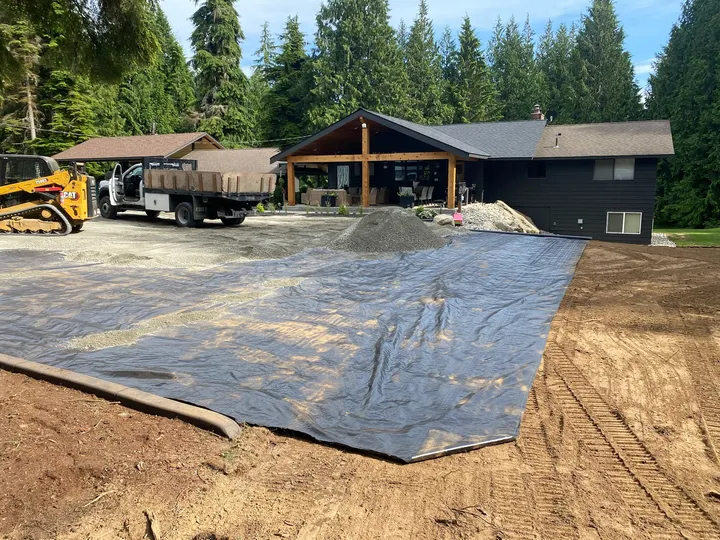
The difference between a materials yard and us is what happens after the tailgate opens. A dump truck can tailgate-spread gravel down a driveway in a rough layer, and for a fresh coat on an existing gravel drive that is often enough. For a new base, a pad, or topsoil for a lawn, we bring the track loader and spread it to grade, then run the plate compactor over base material so it does not rut the first week. On lots the truck cannot reach, the tracked dump buggy carries material from the road to the back yard without tearing up the lawn the way a truck would. If you only need a pile dropped where you point, we can do that too, but ask about spreading when you call, because spreading on the same trip costs far less than a second visit.
Working with the local pits
The gravel we haul comes from a handful of local pits and quarries, and each one runs its own products: different crush sizes, different pit run, and topsoil that may be screened or may be whatever came off the top of the pit. We know which pits are close to your job, which gravel packs well as a base, and which topsoil is worth putting on a lawn. Part of what you pay for is us choosing the right material for the job instead of the closest one. Pit prices change, so we quote each delivery from the current price and the miles to your site. If you want to buy your own material from a pit and have us haul and place it, that works too.
What drives the cost
A delivery quote is the material plus the trucking plus any placing. Here is what moves each part.
- Material type and quantity. Pit price per ton or yard, and how many truckloads it takes.
- Distance from the pit to your site. Trucking is paid by the trip, so a far pit or a far lot adds up.
- Spreading and compaction, or a tailgate dump only.
- Access. A driveway the truck can back down is one thing; a backyard through a gate means the dump buggy and more time.
- Spoils out: the fill-site or disposal fee plus the loads to get there.
- Whether it is part of a larger job we are already on, which saves a trip.
When we would talk you out of it
- Someone who wants a materials yard: a place to drive up, buy half a yard of bark, and load it themselves. We are not a pit or a yard. The local pits and landscape suppliers do that better than we could.
- Bulk orders at pit scale: a builder who needs a steady stream of trucks all week for a subdivision road. We run one dump truck, and that job wants a trucking company with a fleet.
- A single small delivery a long way from Newport. The trucking on a one-load run to the edge of our area can cost more than the material. Check with a pit closer to you first, and we will tell you honestly if that is the better deal.
What you get
- Our own dump truck, so hauling is scheduled with the dig instead of waiting on a trucking company
- Material chosen for the job, not the closest pit
- Spread and compacted with the track loader and plate compactor on request
- Dump buggy for backyards the truck cannot reach
- Spoils placed on site first, hauled only when they have to be
- Delivered on a call-ahead so you are not waiting around for a window
How it goes
- 1
Call or send the form
What material, roughly how much, where it goes, and whether you want it spread.
- 2
Quick site check
For a straight delivery we may only need photos and a description of where the truck can turn around. For a spread-and-compact job we come look at the grade and the access.
- 3
Written quote
Loads, material, spreading, and any spoils going out, priced from the current pit price and the miles.
- 4
Haul and place
We call ahead, deliver, and either tailgate it or spread and compact it, depending on what you asked for. Spoils go out on the return trips.
Questions we get on the site walk
How much gravel do I need for my driveway?
Roughly, multiply length by width by depth in feet and divide by 27 to get cubic yards, then add extra for compaction. A new base is usually several inches thick; a top-up on an existing drive is thinner. Tell us the dimensions and what is there now, and we will work it out in truckloads.
Do you sell gravel or topsoil by the yard?
Not from a yard. We buy from the local pits and haul it to you, and we quote the delivered price including the material and the trucking. If you only want a small amount to pick up yourself, a pit or a landscape supply yard is the right stop. We come in when you want it delivered and placed.
Can you haul away the dirt from my project?
Yes. Spoils from a foundation, pond, trench, or grading job go into the dump truck and out to a fill site if they cannot be spread on your property. We look for a spot on site first because a load that never leaves is the cheapest option. Fill-site fees and the number of loads drive the price.
Will you spread the gravel or just dump it?
Either. The truck can tailgate a rough layer down a driveway, which works for a fresh coat on existing gravel. For a new base, a pad, or topsoil for a lawn, we bring the track loader to spread it to grade and the plate compactor to pack the base. Ask when you call; spreading on the same trip costs far less than a return visit.
Related work
Where we do this work
Hauling on both sides of the Washington and Idaho line: Deer Park, Newport, Diamond Lake, Cusick, Usk, Oldtown, Priest River, Blanchard, Spirit Lake, and the county roads between them. See the full service area.