
Corey Davison · October 14, 2026 · Clearing
Land Clearing Per Acre in North Idaho: What Changes the Number
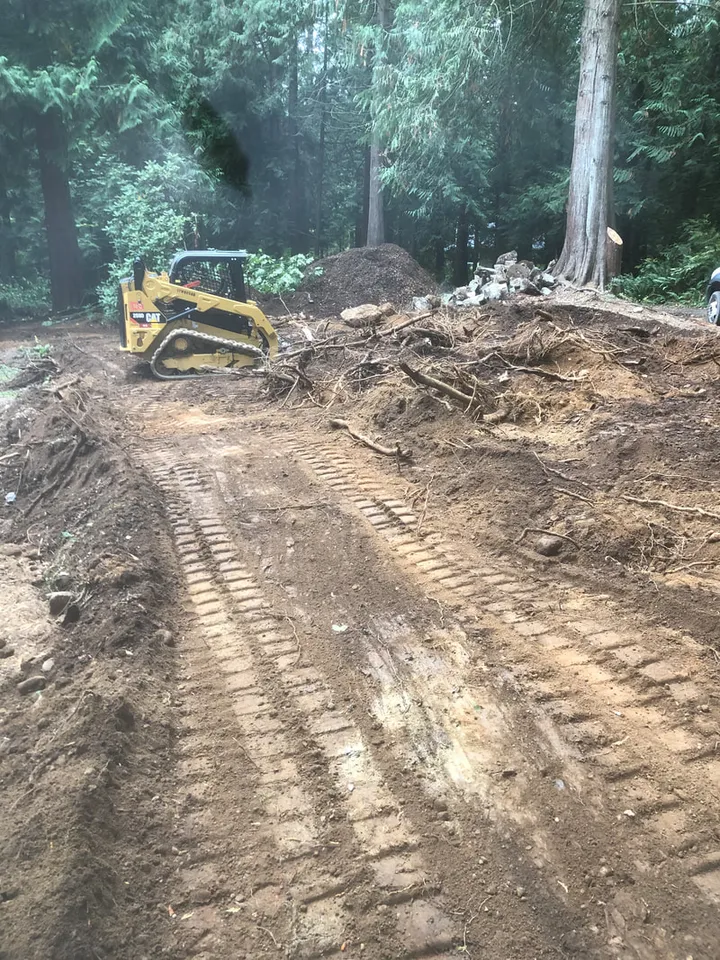
In short: a per-acre price for land clearing is only as good as the acre it is based on. Tree density and size, how many stumps come out, what happens to the slash, the slope, the access, and what you want the ground to be afterward all move it. Two acres near Blanchard can price far apart from two acres at Spirit Lake, and we walk the lot before we say a number.
People who search for a per-acre clearing price are trying to budget, and that is fair. We do not print figures on this site because a figure that fits one lot is wrong for the next one, and lots along ID-41 between Blanchard and Spirit Lake are as varied as any we work. What we can do is lay out exactly what moves the number, so when you get an estimate from us or anyone else you know what it is made of.
Tree density and size
The first thing we count on a walk is trees, and not only how many. An acre of open, park-like ponderosa pine with grass underneath is a light day. An acre of tight second-growth fir with brush filling every gap is not. Big trees take longer to fell and buck, and the wood has to go somewhere. Small dense trees are fast to cut but produce a mountain of slash for the size of the trunks.
We also look at what the trees are worth. Merchantable timber can sometimes be sold or given to a logger, which takes it off the lot without our machines touching it. Whether that is worth doing depends on how much there is and whether a logger will come for it. It is a question for the walk.
Stumps
Stumps are the difference between clearing and grubbing, and the second one costs more. On a bench of glacial gravel near Blanchard, a pine stump pops out with the Cat 303.5E2 in a few minutes and leaves a hole to fill. In heavier ground, or with a big old fir with a root plate the size of a truck, it takes longer and leaves more of a crater. Every stump that comes out is a stump that has to be hauled, burned, or buried, and stumps burn slowly.
Where the ground is going under a house, a driveway, a septic drainfield, or a lawn, the stumps come out, because a rotting stump settles and takes whatever is above it down with it. Where the ground is for pasture, a firebreak, or a view, grinding them flush or leaving them can save real time. We mark which areas get which treatment on the walk.
Slash disposal: burn, haul, or chip
Everything that comes off the lot has to go somewhere, and this choice can swing an estimate as much as the trees do.
Burning is the cheapest when it is allowed, because the pile stays on site and the machine time is just building the pile and tending it. It is regulated. Open burning approval depends on the season, the fire district, and where you are, and it is often easiest in the cold months. We will tell you who to ask for your lot.
Chipping turns the slash into mulch on site. It costs machine time and sometimes a rented chipper, but it leaves nothing to haul and the chips are useful for paths or erosion control on bare slopes. Near houses and in fire season it is often the practical choice.
Hauling is the most expensive, because every load is a round trip in the dump truck to wherever will take it. It is the answer when burning is off the table, the neighbors are close, or the owner wants the lot clean and bare.
Most jobs use two of the three. Stumps and big wood haul or burn, and the brush gets chipped or burned.
Slope
Flat ground clears fast. The track loader pushes, the excavator pulls, the truck backs up to the pile. On a slope, every one of those gets slower. The machines work across the hill instead of straight at it, the slash has to be dragged uphill to a pile that will not roll, and the bare ground needs attention so the first rain does not carry the topsoil into the creek at the bottom. Lots on the hillsides above Spirit Lake and along the benches toward Blanchard have both flat and steep ground, and the estimate reflects which part of the lot is which.
Access
We have to get a trailer with a machine on it to the lot, and later a dump truck. A parcel with a wide approach off ID-41 and a firm two-track to the work is easy. A lot at the end of a narrow easement through someone else’s timber, or across a soft meadow in May, is not. Poor access means the tracked dump buggy does the carrying, which works but takes more trips than a truck, or it means building a temporary road first. Either shows up on the estimate. It also matters for hauling slash: if the truck cannot get to the pile, the pile has to move to the truck.
What you want the ground to be afterward
This is the question we ask before any other, because it decides most of the job. “Cleared” can mean five different things:
- A view cut or a firebreak, where trees come down and stumps stay
- Pasture or a meadow, where stumps are ground or pulled and the ground is rough-graded
- A building pad and driveway, where everything comes out, the topsoil is stripped and saved, and the subgrade is shaped and compacted
- A lawn, where the roots are out, the ground is finish graded, and topsoil goes back on top
- A septic field area, where the ground has to be cleared carefully and never compacted by machines
Each of those is a different amount of work on the same acre. A lot that is being cleared for a house also usually needs site preparation right behind the clearing, and it is cheaper to do both in one mobilization than to clear now and grade next year.
How the season changes it
North Idaho clearing has a calendar. Winter on frozen ground is underrated: the machines do not rut, the slash burns easily, and the schedule is open. Snow depth and getting the trailer in are the limits. Spring thaw is the season to avoid, because soft ground turns clearing into a mud job and mixes topsoil into the subsoil. Late spring through fall is the main window, with the caution that burning gets harder as fire season comes on, so a summer clearing job may chip or haul where a fall job would burn.
What we do on the walk
We walk the lot with you and pace off the area you actually want cleared, which is often smaller than the parcel. We count and size the trees, decide area by area what happens to stumps, look at the slope and the access, and talk through the slash. We check for water and for anything that might need a call to Bonner County Planning or Kootenai County before we start. Then we write it up: the area, the treatment, the disposal method, where the topsoil goes, and what the ground will look like when we leave.
That written plan is the per-acre price that actually means something.
Getting started
If you have a lot near Blanchard, Spirit Lake, or along ID-41 that you want opened up, send the parcel and a few photos through the estimate form. We will walk it with you and put a land clearing plan in writing before a machine leaves the shop.
Want Corey to look at your ground?
Free written estimate after a site walk. Same-day callback.
Questions we get on the site walk
Why do land clearing quotes vary so much per acre?
Because an acre of open pine on a flat bench and an acre of dense fir and brush on a slope are different jobs with the same name. The trees, the stumps, the slash, the slope, and the access each add or subtract hours, and a per-acre quote that ignores them is a guess. Ask what the quote assumes.
Should I leave the stumps or pull them?
Depends on what the ground is for. Under a house pad, a driveway, a septic field, or a lawn, they have to come out, because they rot and settle. On a pasture, a firebreak, or a view cut, grinding them flush or leaving them is often fine and saves real money. We decide this on the walk, area by area.
What is the cheapest way to get rid of slash?
Burning, when it is allowed and the season is right, because the pile stays on site. Chipping is next and leaves a mulch you can use. Hauling is the most expensive because it is truck trips. Which one fits depends on how close the neighbors are, the fire season, and whether you want the ground bare or mulched.
Can you clear land in the winter in North Idaho?
Often, and it can be a good time. Frozen ground carries the machines without rutting, and slash burning is easier to permit in the cold months. What limits it is snow depth and getting the trailer in. Spring thaw is the season we avoid, because soft ground turns clearing into a mud job.
Does clearing a lot need a permit in Bonner County?
It can, depending on the parcel and what is nearby. Bonner County Planning handles land use for Blanchard and Priest River, and Spirit Lake is in Kootenai County. We have not verified a specific acreage threshold, so check with the planning office before clearing. Burning slash needs its own approval, and we will tell you who to call.