
Corey Davison · September 30, 2026 · Clearing
Do You Need a Permit to Clear or Grade Land in Pend Oreille County?
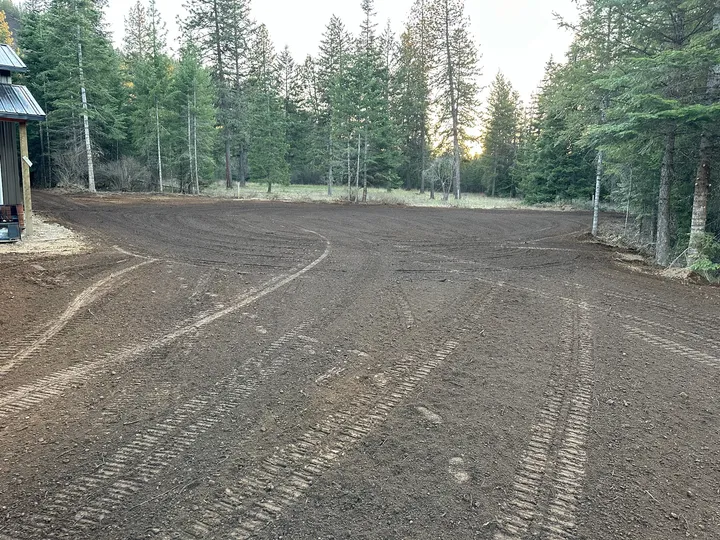
The short answer: sometimes. Pend Oreille County Community Development’s land use page says clearing and grading of more than one acre requires a Clearing and Grading Permit application, and there is no fee for it. Below that line it depends on the acreage, the slope, and whether water is nearby, because shoreline and critical area rules can apply on their own. The Community Development office in Newport is the place to ask, and we will tell you on the site walk which rules apply.
We get this question every spring from people who just bought raw land up the river toward Usk or Cusick and want to open it up before they build. The honest answer has two parts: what the county has actually written down, and the things that can pull a smaller job into a permit anyway. Here is both.
What the county says
Pend Oreille County Community Development handles land use, grading, and building permits for the county. Its land use page states, in plain words, that clearing and grading of more than one acre requires a Clearing and Grading Permit application, and that there is no fee associated with the permit. The office is at 418 South Scott Avenue in Newport, and the phone number listed is (509) 447-4821. The posted hours are weekdays, 8 to 4:30, so plan the call for a workday.
That is what we can verify. The acre is measured on the ground you actually disturb, so if you own ten acres and clear a half-acre pad and a driveway, the question is the size of the cleared and graded area, not the parcel. When it is close, measure it before you decide, and ask the county how they want it counted.
Why the acre is not the whole answer
An acre is one line. Water and slope are the others, and they can matter on a much smaller job.
Pend Oreille County has a lot of shoreline. The Pend Oreille River runs the length of it through Usk and Cusick, and there are lakes, creeks, and wetlands all through the timber. Washington counties regulate work near shorelines and in critical areas like wetlands, streams, and steep or unstable slopes under their own rules. We have not verified the county’s exact setbacks or thresholds for those, so we will not quote them here. What we can say is that if your lot touches a lake, the river, a stream, a wet spot that holds water in spring, or a steep bank, ask the county before you clear near it, no matter how small the job.
Slope matters for a practical reason too. Grading on a hillside moves more dirt than grading on the flat, disturbs more ground to get a level pad, and sends runoff somewhere it was not going before. That is exactly the kind of work a grading rule is written for.
What clearing and grading means on our jobs
It helps to know what the county is looking at, because “clearing” and “grading” are two different things on a lot.
Clearing is taking off the vegetation: felling the trees, pulling or grinding the stumps, and removing the brush and slash. On the wooded lots around Usk that is ponderosa pine and mixed conifer, and the slash pile can be as big as the house. We do it with the compact track loader and the Cat 303.5E2, which pop stumps in the glacial gravel on the benches without tearing up more ground than needed.
Grading is reshaping the dirt: stripping topsoil, cutting the high side, filling the low side, and compacting a pad or a driveway base. Grading is where the runoff changes, and it is what the county’s application is mostly interested in. A cleared lot that still has its natural grade sheds water the way it always did. A graded pad sends it somewhere new.
On most of our land clearing jobs the two are one contract, and the cleared area and the graded area are not the same size. The application asks about both.
Water, silt, and where the runoff goes
Once a lot is opened up, the first spring rain finds every bare slope. On the benches, the cobble and gravel drain and the silt mostly stays put. In the river bottom, the fine sand and silt move with the first heavy rain and end up in the ditch, the neighbor’s lot, or the river. Silt fence, a rock-lined swale, and keeping the topsoil stockpile away from the low side are cheap insurance, and on a permitted job they are usually expected.
We plan the runoff before we clear, on the walk, because it is easier to leave a strip of brush along a creek than to put it back.
Timing and the season
Two things about the calendar. First, the permit takes time to process, so if you want a lot cleared in early summer, start the paperwork in spring. Second, spring thaw is mud season here. Clearing in April on soft ground ruts the lot, mixes topsoil into the subsoil, and leaves you with a mess to fix later. We would rather clear in late spring through fall on firm ground, or in winter on frozen ground when the job suits it.
Slash disposal has its own rules. Burning piles is regulated separately from the clearing permit, and who you ask and when you can burn depends on the season and the fire district. We will tell you who to call for your lot. Hauling or chipping the slash avoids the question entirely and is often the better choice near houses.
What about the Idaho side
Oldtown, Priest River, and Blanchard are in Bonner County, and Spirit Lake is in Kootenai County. Bonner County Planning handles land use on that side of the line, and Idaho’s rules are not the same as Washington’s. We have not verified an acreage threshold for clearing in Bonner County, so check with the planning office in Sandpoint before you open up a lot there. We will tell you on the site walk what we know applies.
What we do on the site walk
Before we quote a clearing or grading job we walk the lot with you. We pace off the area you actually want cleared, look at the slope, find any water on or next to the parcel, and check the access for the trailer and the truck. If the cleared area is near the acre line, we say so. If there is a creek, a wet spot, or a bank, we point it out and tell you it needs a call to the county before we schedule. Then we put the work in writing, including where the slash and the topsoil go.
If the job is over an acre, we go over the clearing and grading application with you so the description of the work matches what the machines will actually do, and the county is not surprised by a change of plan halfway through. That walk is how we keep you out of a stop-work notice, and it is free.
Getting started
If you have a lot near Usk, Cusick, or anywhere along the river you want opened up, send us the parcel and a few photos through the estimate form. We will walk it, tell you which rules apply, and put a clearing and grading plan in your hand you can take to the county.
Want Corey to look at your ground?
Free written estimate after a site walk. Same-day callback.
Questions we get on the site walk
Do I need a permit to clear less than an acre in Pend Oreille County?
The county's one-acre clearing and grading application does not apply below an acre, but that is not the whole answer. If the lot touches a lake, the river, a stream, a wetland, or a steep slope, other rules can apply regardless of size. Check with Community Development in Newport, and we will flag anything we see on the site walk.
Is there a fee for the clearing and grading permit?
The county's land use page says there is no fee for the Clearing and Grading Permit application. It still has to be filled out and submitted before work on more than an acre starts. Other permits that may be triggered on the same lot, like shoreline or building permits, have their own process and their own fees.
Who fills out the clearing and grading application?
The property owner usually does, since it concerns the parcel. We can help with the parts that describe the work, like the area being cleared, where the material is going, and how runoff will be controlled. Ask the county whether they want it from the owner or the contractor for your situation.
What about clearing on the Idaho side?
Bonner County Planning handles land use on the Idaho side, and the rules are different from Washington's. We have not verified a specific acreage threshold there, so check with Bonner County Planning in Sandpoint before clearing. Slash burning is regulated separately in both states, and we will tell you who to ask.
Can you start clearing while I wait on the county?
Not on the part of the lot the permit covers. We can do the site walk, mark the trees to keep, plan where the slash goes, and dig septic test holes if the designer needs them. Once the county has what it needs, we schedule the machine. Starting early on a permitted area is the fastest way to a stop-work notice.